—16,000 doctors emigrated in 5 years
—It’s worsening Nigeria’s mental health crisis — ARD, FNPH Yaba
—85% of Nigerians with mental disorders lack treatment access
By Chioma Obinna
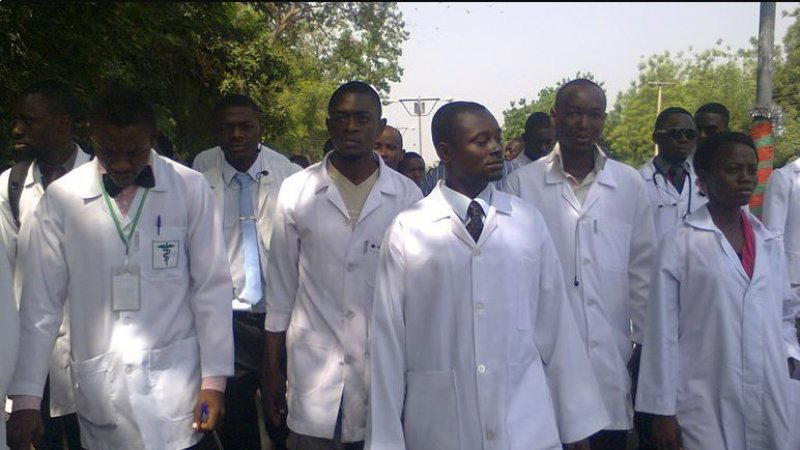
LAGOS — Medical doctors have raised alarm that the country’s healthcare system is facing a dangerous manpower crisis, with only about 55,000 doctors left to serve a population of more than 220 million people.
They raised the alarm at the Ordinary General Meeting and Scientific Conference of the Association of Resident Doctors, ARD, Federal Neuropsychiatric Hospital, FNPH, Yaba, Lagos, with the theme, “Too Few Doctors, Too Many Patients: The Consequences of Manpower Shortage on the Mental Well-being of Nigerians.”
The doctors, among whom are mental experts, also said the present situation is worsening access to psychiatric care and leaving millions of vulnerable Nigerians untreated.
The doctors also said no fewer than 16,000 Nigerian doctors have emigrated in the last five years, worsening an already dire manpower shortage in the country’s health sector.
They warned that the sustained exodus of healthcare workers under the “Japa” syndrome had severely depleted the country’s mental health workforce, widened treatment gaps, increased the cost of care and placed enormous pressure on the few specialists remaining in the system.
Confirming the situation to Vanguard yesterday, the President of Nigerian Medical Association, NMA, Prof Omoti Ernest, said recent data showed that the Medical and Dental Council of Nigeria, MDCN, had registered over 130,000 doctors but noted only about 55,000 are actively practicing within Nigeria.
He said with a population exceeding 220 million, this translated to roughly one doctor for every 3,600 to 4,000 people.
“This ratio is far below the World Health Organisation’s recommended threshold of one doctor to about 600 people, highlighting the significant shortage of medical personnel and the strain on healthcare delivery.
“Many Nigerian-trained doctors have emigrated or are no longer engaged in active clinical practice, contributing to the country’s healthcare workforce shortage,” the NMA President said.
He said the emigration of skilled professionals in search of better opportunities abroad has had a significant impact on Nigeria’s hospitals and healthcare workforce.
He said further: “Thousands of doctors and other healthcare professionals have left the country in recent years, leading to severe staff shortages, increased workload for those who remain with many suffering from burnout, longer waiting times for patients, and declining quality of care in many public hospitals.
“Rural and under-served communities have been particularly affected, as they already struggle with limited access to healthcare services.
‘’The reasons behind this migration include poor remuneration, inadequate working conditions, insecurity, limited opportunities for career advancement, and insufficient investment in healthcare infrastructure, among others.
“Many professionals are attracted by better pay, improved facilities, and more stable environments in countries such as the United Kingdom, Canada, and the United States.”
‘What can be done’
To address the trend, he said the Federal Government should prioritise salaries and welfare packages for healthcare workers, invest more in modern medical equipment and hospital infrastructure, expand residency and specialist training opportunities, and create clear career progression pathways.
Omoti said: “Strengthening security, ensuring timely payment of wages, and providing incentives for professionals to work in under-served areas will also help retain talent.
‘’In addition, partnerships with the private sector and diaspora engagement programmes could encourage Nigerian healthcare professionals abroad to contribute their expertise and support development of the country’s healthcare system.”
Speaking at the parley, a Consultant Psychiatrist at the Neuropsychiatric Hospital, Aro, Dr. Yesir Kareem, said Nigeria’s doctor-to-patient ratio had fallen to about one doctor for more than 10,000 patients, far below the World Health Organisation’s recommended ratio of one doctor to 600 people.
According to him, the consequences are particularly devastating for mental healthcare.
“Only about 55,000 doctors remain to serve a population of over 220 million Nigerians. More than 40 million Nigerians suffer from mental health disorders, yet about 85 per cent of them do not have access to mental healthcare services,” Kareem said.
He noted that Nigeria’s shortage of psychiatrists and other mental health specialists has reached alarming levels, warning that untreated mental illnesses contribute to family breakdowns, substance abuse, unemployment, delayed diagnosis and premature deaths.
“The economic consequences are equally devastating, with billions of dollars lost annually due to untreated mental health conditions,” he added.
He also noted that 94,000 doctors and nurses had left Nigeria since the Japa syndrome started some years ago.
He said the doctors were leaving due to poor remuneration and delayed salaries, competitive salaries in destination countries, overwhelming patient loads (1:10,000+), better work-life balance and conditions, and inadequate medical equipment & facilities.
He also listed access to modern medical technology, limited career advancement opportunities, professional development and training, unsafe working conditions and long hours, unstable political and economic environment and insecurity and socioeconomic instability as factors encouraging migration of doctors from the country.
President of the Association of Psychiatrists in Nigeria, APN, Dr. Veronica Nyamali, in a chat with Vanguard, described the manpower shortage as a crisis that had forced consultants to abandon higher-level responsibilities, such as research and specialist care, in order to fill gaps left by departing doctors.
“There are gaps everywhere. Work that should be done by four psychiatrists is now being handled by one or two people. Consultants are increasingly forced to work at lower levels because the doctors they are supposed to supervise are no longer there,” she said.
Nyamali lamented that many doctors undergoing specialist training now leave the country before completing their careers in Nigeria, creating persistent vacancies across psychiatric facilities.
“Those we train are leaving. Junior registrars, senior registrars, many complete their examinations and return abroad. The result is that we have shortages at every level of care,” she stated.
Disclosing that the country currently has less than 150 psychiatrists, she warned that the dwindling number of specialists is making mental healthcare increasingly expensive and inaccessible, especially for patients in rural communities where psychiatrists are virtually non-existent.
‘Specialists now scarce’
“When specialists become scarce, services become more expensive. Access becomes difficult because patients must travel long distances to find care. This is contrary to the principle of universal health coverage, where mental health services should be available, affordable and accessible to everyone,” Nyamali said.
The APN president further linked the brain drain to a shrinking pharmaceutical landscape, saying several pharmaceutical companies had either scaled down operations or exited the country, reducing access to newer and more effective psychiatric medications.
“We now have fewer treatment options. Some of the newer drugs that offer better outcomes are no longer readily available. At the same time, the market is being flooded with fake medicines, making treatment even more challenging,” she warned.
Nyamali noted that the shortage of specialists has created room for greater reliance on traditional and faith-based healers, who are often the first point of contact for people with mental illnesses.
While acknowledging their influence within communities, she said psychiatrists are increasingly collaborating with traditional and religious healers to discourage harmful practices such as chaining, flogging and unlawful confinement of persons living with mental disorders.
“We recognise that people go to them first because they are available, accessible and affordable. Rather than confront them, we are engaging them and providing basic mental health education so that harmful practices can be eliminated and patients referred appropriately,” she explained.
Nyamali also highlighted the growing burden of mental illness in Nigeria, linking rising cases to worsening economic hardship, insecurity, unemployment, substance abuse, kidnappings and other traumatic experiences.
“People are being traumatised daily. Poverty, joblessness, violence and insecurity are all social determinants of mental illness. Those already living with mental health conditions are relapsing more frequently, while many others are developing new mental health challenges because of the pressures of daily living,” she said.
She expressed concern that mental healthcare remains largely financed through out-of-pocket spending, despite the chronic nature of many psychiatric conditions.
“Mental illness is not properly covered under health insurance. Many of the newer medications are not included in insurance drug lists, leaving families to bear enormous treatment costs. The burden on care-givers is huge,” she added.
At the conference, the President of ARD, FNPH Yaba, Dr. Okuwoga Temitope, said the shortage of doctors has become a major threat to access to quality mental healthcare in Nigeria.
“As mental health professionals, we witness first hand the widening treatment gap, the burden on already stretched healthcare workers and the impact these shortages have on access to quality mental healthcare for Nigerians,” he said.
Temitope noted that resident doctors are increasingly battling burnout, anxiety, stress and depression due to overwhelming workloads caused by the shortage of manpower.
The association urged federal and state governments to improve remuneration, strengthen welfare packages, expand specialist training programmes, improve working conditions and increase investment in mental healthcare to stem the tide of migration.
The doctors also advocated the integration of mental health services into primary healthcare centres, wider deployment of telepsychiatry and increased public awareness to reduce stigma and improve early treatment seeking.
In a communiqué issued at the end of the conference, the association reaffirmed its commitment to advancing the welfare of resident doctors and improving access to quality mental healthcare services across the country.
It also urged the management of the Federal Neuropsychiatric Hospital, Yaba, to expedite the enrolment of newly employed resident doctors on the Integrated Payroll and Personnel Information System, IPPIS, to prevent salary delays and financial hardship.
The doctors, however, commended the Medical Director of the hospital, Dr. Olugbenga Owoeye, for restoring public electricity supply to the Yaba and Oshodi arms of the institution after a prolonged outage, while calling for more stable power to support patient care and residency training.
My take on Kwara’s next governor — Former Information Commissioner
Former Commissioner for Information in Kwara State, Raheem Adedoyin, has called on leaders of All Progressives Congress, APC, in the state to bury the hatchet, embrace genuine reconciliation, seek fair accommodation, and work for victory of the party.
According to him, the leaders should work with the governorship candidate for the 2027 elections who already recognises this necessity and has begun reconciliation efforts
In a statement he issued yesterday, Adedoyin said: ‘’For Kwara and possibly a few other Nigerian states, the 2027 election has many implications. In the All Progressives Congress, APC, we are looking to consolidate the gains of the last few years after the bloodless Otoge revolution.
‘’I was a part of the Otoge Movement that consummated the revolution. Infact, I hosted at my residence, in Ilorin, the crucial meeting that produced Bashir Bolarinwa as APC state chairman.
‘’Claims that nothing has been achieved are typical political rhetoric; the administration of Governor AbdulRahman AbdulRazaq has few peers in the history of this state, and I say this with the benefit of experience as a former commissioner and senior citizen.
‘’In building on these achievements, however, we should do more than merely win another election. Through the 2027 poll, we should further strengthen the fabric of our society and leave to the next generation a state that is not only competitive in development indices but also more equitable, fair, and sustainably peaceful.
‘’History teaches that success without social justice amounts to little. As a journalist, statesman, and party stakeholder, I believe I am qualified to speak on the current debate about where the next governor should come from.
‘’My position has consistently been that Kwara North should produce the next governor. I believe going South or Central is less strategic for the ruling party for several reasons. First, it would show insufficient appreciation for a region that has remained loyal to the party since 2019.
‘’Consistently, Kwara North has delivered bloc votes for the APC. For instance, of the votes polled by Governor AbdulRazaq in 2019, 31.8% of the APC votes came from Kwara North. In 2023, the governor/APC again secured 34.3% of its victory figures from the region, even when the main opposition party picked its gubernatorial flag bearer from there.
‘’The same pattern was evident in the presidential elections of both cycles. Neither Kwara Central nor South has much to prove again in gubernatorial politics. By 2027, Central would have governed the state for 20 years, while South occupied the seat between 2011 and 2019 — eight years. Kwara North has had no opportunity.
‘’Quite frankly, I am concerned by narratives that Kwara North lacks the numbers or competent candidates. Such claims are weak and unverified in light of available electoral data. More importantly, they risk turning one leg of the state’s tripod into a permanent political underclass. ‘’That is not how harmonious societies are built. As the Yoruba say, ajoje odun b’enikan oni — we should avoid monopolies that breed bitterness.
‘’Second, picking our candidate outside Kwara North could create the impression that our leaders have scant regard for social justice. No society thrives that way, and we must tread carefully. Third, we risk alienating the entire region.
‘’That, in my view, could hand the opposition a near-irreversible advantage in the next election. As a party administrator and strategist, I do not agree that retaining the ticket in the North is a bad strategy. Nothing concrete supports that conclusion.
‘’Matter-of-factly, I do not dispute claims that Kwara Central has the largest voting strength today. However, a closer analysis reveals that these votes do not belong to ethnic Ilorin alone. Ilorin is the most urbanised part of Kwara, owing to its status as the capital and to population inflows driven partly by insecurity in other parts of the country, including the hinterlands of Kwara itself.
‘’This is not an indictment of anyone; it is a social reality across Nigeria. For instance, much of Ilorin South’s population is not made up solely of indigenous Ilorin people. Many densely populated areas are inhabited by Kwarans from the South, North, and non-Kwarans.
The same is true of parts of Ilorin West, the state’s most populous local government, and to some extent Ilorin East. Any assessment of Ilorin’s voting strength must, therefore, account for these demographic realities while acknowledging the admirable tradition of Ilorin people investing in and building their community.
This demographic mix differs from what obtains in Kwara North and, to a lesser extent, Kwara South. I say “to a lesser extent” because the most ethnically contiguous region in Kwara is the North, dominated by the Baruba/Bokobaru and Nupe peoples. That may be connected to their longstanding focus on agriculture and related vocations.
‘’Claims that no primaries took place are merely attempts to discredit candidate Salihu Yakubu Danladi and others. This does not help our party, the President, or the Governor. The Speaker, though young, is as competent as any aspirant and has led the House successfully for seven years.
Rather than campaigning to reverse the outcome of the primaries,
‘’I urge party leaders to bury the hatchet, embrace genuine reconciliation, seek fair accommodation, and work for victory once again. I believe the candidate himself recognises this necessity and has already begun reconciliation efforts.’’